
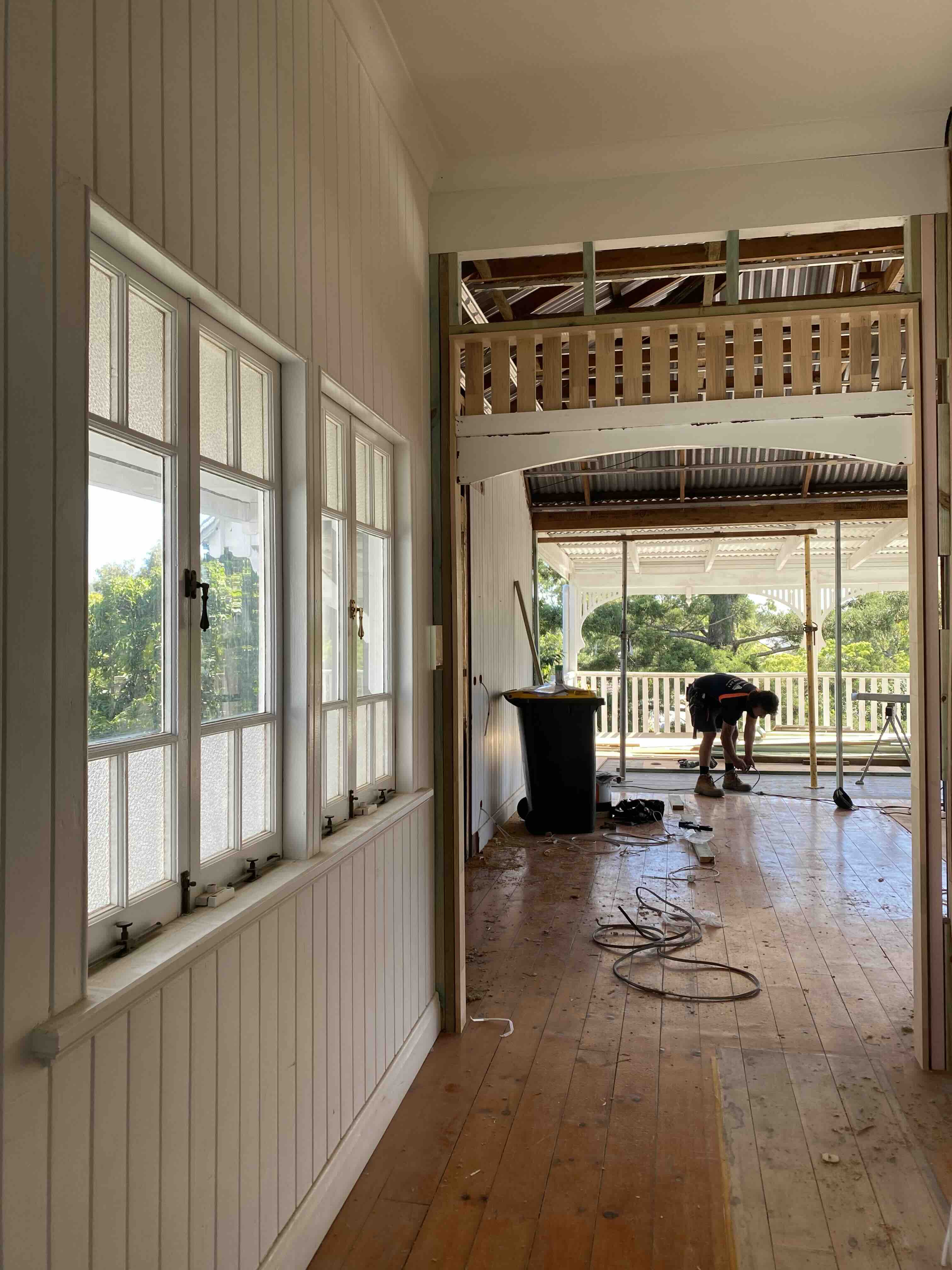
The renovation you want and the budget you have right now aren't always the same thing. That's not a failure, it's reality. It's one of the most common conversations I have with clients. A staged renovation can get you started now, deliver a genuinely beautiful result in Stage 1, and set you up to complete the full vision when the time and money are right. But it needs to be done properly — because a poorly planned staged renovation can cost significantly more in the long run.
Staging means completing your renovation in two or more construction phases, separated by time, usually 12 months to several years.
Stage 1 might include the essential works: restructuring the back of the house, building the new kitchen, adding a bathroom, connecting the home to the garden. Stage 2, when you're ready, adds the pool, the carport, the deck, or the home office.
Design for staging from day one. This is where most staged renovations go wrong.
If Stage 1 isn't designed with Stage 2 in mind, you end up demolishing work from the first phase when the second begins. That's expensive and frustrating. But it can be avoided.
A properly staged design anticipates future construction. It puts services, structural elements, and connections in positions that won't need to move. It means Stage 2 picks up where Stage 1 left off, rather than undoing it.
In many cases, you can obtain a single Development Approval covering the full scope of both stages, then apply for Building Approval for each stage separately as you're ready.
This locks in your planning approval, protecting you from future changes to council rules, while giving you flexibility on timing. Your architect can advise on the best approach for your specific site and council area.
When Stage 1 is complete, you should be living in a home you genuinely love, not a home that feels half-done. The best Stage 1 designs deliver the essential transformation while concealing any incompleteness. When friends visit, they shouldn't be able to tell there's a Stage 2 coming.
Staging suits families whose needs will change over time, where Stage 1 addresses today's priorities and Stage 2 responds to what the family needs in three to five years.
Wondering whether staging could work for your project? Let's talk it through. I can usually give you a sense of what's possible in our initial phone call. Get in touch.
